
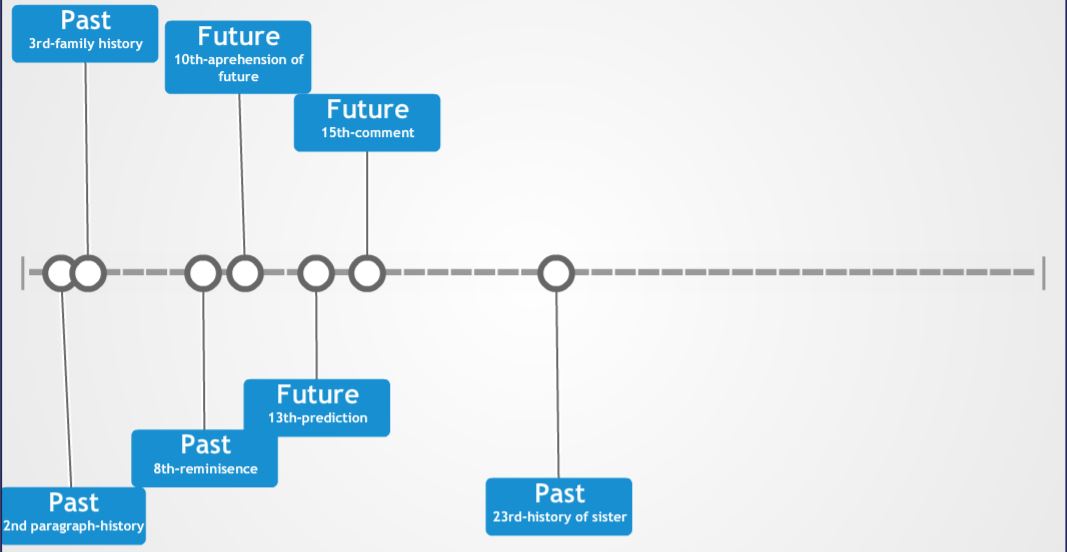
I chose to look at the use of tense and pacing in The Fall of the House of Usher by Edgar Allan Poe. Obviously, the tense is all past with first person POV, but Poe can reference the history of the narrative and the future of it within that framework. Poe uses this tool to construct a more involved story and intense climax. The first paragraph is a description of the house, informing the reader where the plot is to take place. The next two paragraphs center the reader in terms of what the House of Usher really is and what the narrator’s relation to the inhabitants is, stating, “its proprietor, Roderick Usher, had been one of my boon companions in boyhood” (Poe 1). This background information allows readers to put together a historical idea of the house and why the narrator remains to help. The description continues, with few discriminated occasions of action. Then Poe begins to drop hints of the future – foreshadowing and the like, to heighten our anticipation and apprehension of the seemingly innocuous situation. Usher himself says “I dread the events of the future” which convinces the reader to also have suspicions about what is to come and creates tension (Poe 4). There are a few more times Poe delves into the past or present, ending on page eight, when the narrator learns “that sympathies of a scarcely intelligible nature always existed between [Rodrick and his sister]” which becomes relevant when Rodrick shares the epiphany of what has become of his sister. After this, however, the pacing slows down considerably and Poe leaves out any other background information. The focus is now completely on the plot and the discovery of what is occurring in this strange house. The story has finished with the bulk of the description and background and can now move toward a more informed and profound action and the climax.
__________
Works Cited:
